
Evergreen Webinar Funnel Explained: Automated Webinar Funnels That Scale Sales
A complete guide to evergreen webinar funnels. Learn what an evergreen webinar funnel is, how it works, and the three main funnel models for free and paid traffic.
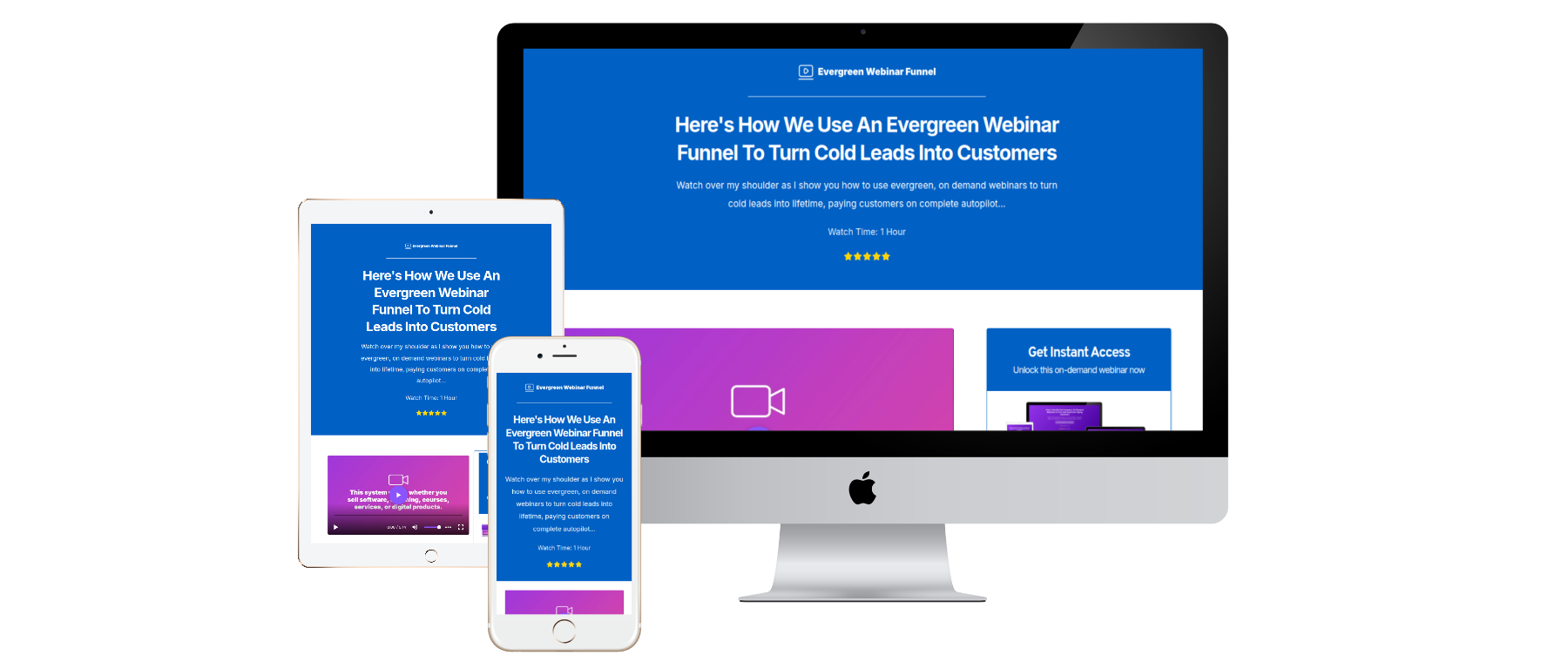
An evergreen webinar funnel is an automated marketing system that delivers a webinar experience on demand and converts viewers into customers without requiring a live presentation.
Unlike live webinars, which depend on fixed schedules and real-time attendance, evergreen webinar funnels are always available. This makes them highly scalable and well suited to both organic traffic and paid advertising strategies.
An evergreen webinar funnel is best understood not as a single page, but as a structured system designed to educate, persuade, and convert consistently over time.
What Makes a Webinar Funnel “Evergreen”?
A webinar funnel becomes evergreen when it is detached from any specific date, time, or live delivery requirement. This allows the same presentation to be reused indefinitely while maintaining a high-conversion structure.
To clarify this concept further, an evergreen webinar funnel is defined by several core characteristics that separate it from traditional webinar models:
- The webinar is pre-recorded rather than live
- The funnel runs continuously without manual intervention
- Visitors can access the webinar at any time
- The sales process is automated end to end
Together, these characteristics explain why evergreen webinar funnels are considered a foundational system for scalable digital marketing rather than a one-off campaign.
Why Evergreen Webinar Funnels Are Used in Modern Marketing
Evergreen webinar funnels are widely used because they solve multiple marketing problems at once. They educate prospects, establish authority, and present offers in a controlled environment, all while running automatically.
From a strategic perspective, evergreen webinar funnels succeed because they combine several marketing advantages into a single system:
- Long-form education builds trust and credibility
- Authority positioning reduces buyer resistance
- Automation allows for scale without added workload
This combination is difficult to replicate with short-form funnels or static sales pages, which is why evergreen webinar funnels continue to outperform many other conversion systems.
Evergreen Webinar Funnel vs Live Webinar Funnel
Many people searching for evergreen webinar funnels want to understand whether they still outperform live webinars. The answer depends on the goal, but for scalability and predictability, evergreen systems are usually superior.
To clearly illustrate the differences, the following comparison highlights how evergreen webinar funnels differ from live webinar funnels in practical terms:
- Evergreen webinar funnels run continuously, while live webinars run on fixed dates
- Evergreen funnels do not require a presenter to be live
- Evergreen funnels scale without additional time investment
- Live webinars require repeated promotion and delivery
Because of these differences, evergreen webinar funnels are typically chosen for long-term growth, while live webinars are reserved for launches or community engagement.
Core Structure of an Evergreen Webinar Funnel
Although evergreen webinar funnels can vary in design, they are all built from the same foundational components. Understanding these components helps explain how and why the system works.
At a high level, every evergreen webinar funnel includes the following structural elements:
- A traffic source that brings users into the funnel
- An entry mechanism that controls access to the webinar
- A webinar watch page where the presentation is delivered
- One or more offers presented during or after the webinar
Each component plays a specific role, and removing or misaligning any one of them can reduce overall performance.
Traffic Sources for Evergreen Webinar Funnels
Traffic is the fuel that powers an evergreen webinar funnel. Without consistent traffic, even the best webinar will fail to produce results. The two primary traffic categories used with evergreen webinar funnels are:
- Free traffic, such as SEO, content marketing, social media, and YouTube
- Paid traffic, such as Facebook Ads, Google Ads, and YouTube Ads
Choosing the correct funnel model based on the traffic source is critical, as different evergreen webinar funnels are designed for different traffic economics.
The Three Evergreen Webinar Funnel Models Explained
There are three established evergreen webinar funnel models that consistently perform across industries. Each model is designed around a specific balance of friction, intent, and traffic cost.
Before exploring them individually, it’s important to understand that no single model is “best” in all situations. The effectiveness of each depends on how it aligns with traffic source, audience temperature, and business goals.
The three evergreen webinar funnel models are:
- Frictionless evergreen webinar funnel
- List-building evergreen webinar funnel
- Paid evergreen webinar funnel
Each of these models is explained in detail below.
Frictionless Evergreen Webinar Funnel
A frictionless evergreen webinar funnel sends visitors directly to the webinar watch page without requiring an opt-in, registration, or payment.
The goal of this model is to remove all barriers between the visitor and the content, maximising accessibility and watch rate.
How the Frictionless Evergreen Webinar Funnel Works
The frictionless model is intentionally simple, with a direct path from traffic source to webinar content. The typical flow of a frictionless evergreen webinar funnel looks like this:
- A visitor clicks a link from free traffic
- The webinar watch page loads immediately
- The pre-recorded webinar plays on demand
- Three offers are presented: a product, a service, and a subscription
This streamlined flow works best when traffic is abundant and free, as it prioritises volume over lead capture.
Traffic Strategy for Frictionless Funnels
Frictionless evergreen webinar funnels are designed specifically for free traffic. Using paid traffic with this model is rarely profitable due to the lack of lead capture and follow-up.
Common free traffic sources include:
- Organic search traffic
- Blog content and internal linking
- YouTube videos
- Organic social media posts
These sources allow the funnel to scale without increasing acquisition costs.
Pros and Cons of Frictionless Evergreen Webinar Funnels
Before choosing this model, it’s important to understand both its strengths and limitations. The primary advantages of a frictionless evergreen webinar funnel include:
- No barriers to entry
- High webinar view rates
- Simple technical setup
- Strong performance with cold audiences
However, this simplicity also introduces several disadvantages:
- No email list growth
- No follow-up for non-buyers
- Lower lifetime customer value
- Limited retargeting opportunities
As a result, this model is best suited for reach and monetisation rather than long-term relationship building.
List-Building Evergreen Webinar Funnel
A list-building evergreen webinar funnel introduces an opt-in step before granting access to the webinar. This adds friction, but creates a long-term marketing asset.
This model is often chosen by businesses focused on nurturing prospects over time rather than maximising immediate reach.
How the List-Building Evergreen Webinar Funnel Works
The list-building model follows a more traditional funnel structure that prioritises lead capture.
The typical flow looks like this:
- Traffic lands on a squeeze or landing page
- The visitor enters basic details such as name and email
- The user is redirected to the webinar watch page
- The webinar delivers value and presents offers
- Follow-up continues via email
This structure allows businesses to continue marketing to prospects who do not convert immediately.
Traffic Strategy for List-Building Funnels
List-building evergreen webinar funnels work best with traffic sources that are either free or relatively low cost. Common traffic sources include:
- SEO and content marketing
- Organic social media
- Warm retargeting ads
Because opt-ins reduce conversion rates, traffic costs must remain manageable for this model to be effective.
Pros and Cons of List-Building Evergreen Webinar Funnels
This model offers a balance between automation and long-term growth. The primary advantages include:
- Builds an owned email list
- Enables follow-up and remarketing
- Increases lifetime customer value
- Supports education-heavy offers
However, there are also drawbacks to consider:
- Lower initial conversion rates
- More technical setup
- Requires email marketing infrastructure
This model is ideal for businesses that value long-term audience ownership.
Paid Evergreen Webinar Funnel
A paid evergreen webinar funnel charges a small upfront fee to access the webinar and uses funnel economics to fund paid advertising.
This is the most advanced and scalable evergreen webinar funnel model.
How the Paid Evergreen Webinar Funnel Works
The paid model is designed around self-liquidating funnel principles. The typical flow includes:
- Paid ads send traffic to a checkout pag
- Visitors pay a low entry fee (usually $3–$27)
- Order bumps increase average order value
- Upsells and downsells maximise revenue
- The webinar sells the core offer
When properly optimised, this structure allows advertising costs to be recovered or exceeded.
Traffic Strategy for Paid Evergreen Webinar Funnels
This model should only be used with paid traffic, as its economics are designed to support ad spend. Common platforms include:
- Facebook and Instagram Ads
- Google Ads
- YouTube Ads
Attempting to use this funnel without paid traffic typically limits its scalability.
Pros and Cons of Paid Evergreen Webinar Funnels
The paid evergreen webinar funnel offers the strongest performance potential but also the highest complexity. Key advantages include:
- Highest-quality leads
- Predictable scaling
- Ability to self-fund ads
- Immediate customer acquisition
Potential disadvantages include:
- Complex setup
- Requires accurate tracking
- Not suitable for beginners
For experienced marketers, this is often the most powerful evergreen webinar funnel available.
Free Traffic vs Paid Traffic for Evergreen Webinar Funnels
Traffic source selection is one of the most important strategic decisions when building an evergreen webinar funnel. Free traffic is best aligned with:
- Frictionless evergreen webinar funnels
- List-building evergreen webinar funnels
Paid traffic is best aligned with:
- Paid evergreen webinar funnels
Using the wrong traffic source with the wrong funnel model is a common cause of poor performance.
Common Evergreen Webinar Funnel Mistakes
Many evergreen webinar funnels fail not because the concept is flawed, but because of avoidable execution errors. Some of the most common mistakes include:
- Sending paid traffic to frictionless funnels
- Weak or unclear webinar offers
- Overloading the webinar with information
- No urgency or scarcity
- Inadequate tracking and analytics
Avoiding these mistakes can dramatically improve conversion rates.
Evergreen Webinar Funnel FAQs
Evergreen webinar funnels often raise similar questions for business owners, marketers, and creators who are considering automation. Below are some of the most common questions, answered clearly and practically.
What is an evergreen webinar funnel?
An evergreen webinar funnel is an automated system that delivers a pre-recorded webinar to new prospects on an ongoing basis. Instead of running live events on fixed dates, the funnel allows people to register and watch the presentation at any time (or at scheduled intervals), followed by automated emails, offers, and follow-up sequences designed to convert viewers into customers.
Do evergreen webinar funnels still work?
Yes, when they are built and executed correctly. Evergreen webinar funnels continue to perform exceptionally well because they combine education, storytelling, and sales in a structured format that scales. The key to success is alignment: the right traffic source, the right funnel model, and a webinar that delivers genuine value while clearly positioning the offer.
Which evergreen webinar funnel model is best?
There is no single “best” model for every business. The right choice depends on your traffic strategy and goals.
- Frictionless funnels work well for organic traffic and warm audiences.
- List-building funnels are ideal when growing an email list is a priority.
- Paid evergreen funnels are best suited for businesses ready to scale with advertising and optimize for predictable ROI.
Choosing the correct model and matching it with the right traffic, is often more important than the webinar itself.
Are evergreen webinars better than live webinars?
Evergreen webinars are not better in every situation, but they are more scalable. Live webinars can create urgency and real-time interaction, while evergreen webinars provide consistency, automation, and the ability to sell 24/7. Many businesses successfully use a hybrid approach, testing content live first and then converting high-performing webinars into evergreen funnels.
How long does it take to see results from an evergreen webinar funnel?
Results can appear quickly once traffic is flowing, but optimization is ongoing. Initial data often reveals where improvements can be made, such as registration rates, watch time, or offer conversion. The most successful evergreen funnels are treated as long-term systems that are refined over time rather than one-time launches.
In summary: evergreen webinar funnels remain one of the most effective automated sales systems available, when they are properly structured, matched with the right funnel model, and supported by a consistent traffic strategy.
Evergreen Webinar Funnels as a Scalable System
An evergreen webinar funnel is a long-term, automated system designed to educate, convert, and scale without live delivery.
The three models, frictionless, list-building, and paid evergreen webinar funnels, each serve a specific purpose and should be chosen based on traffic source and business goals.
When aligned correctly, evergreen webinar funnels provide predictable growth, scalable revenue, and reduced reliance on manual marketing.
Copyright © 2025 - Evergreen Webinar Funnel. All Rights Reserved.